Local SEO for auto service businesses
Auto work is won on proximity and trust. We make sure the shop shows up for the street the driver is on and looks worth stopping at when it does show up.

Every job has its own search
Tap a job to see how we rank you for it. Each one is a thing customers actually type, and each earns its own ground in the build.
Brake repair
A driver who hears a grinding noise when they stop does not wait. They search for brake repair near them, check the reviews and call. It is one of the most searched jobs in your trade and one of the most trusted, so it needs a page of its own. We write it around the symptoms people describe, and we keep your Google Business Profile in step so the map result and the page agree.
Engine diagnostics
A warning light on the dashboard is a search waiting to happen. The driver types the light, the symptom or the code, and wants to know who can read it today. Diagnostics is often the first visit that leads to a bigger repair, so it deserves its own page. We write it around the faults you diagnose and the equipment you use, as part of a topical map that feeds the rest of your repairs.
Transmission repair
Transmission trouble is expensive, and the customer knows it, so they search carefully and compare shops before they call. They type the make, the symptom and the town. A big ticket job like this needs a page that builds confidence before the phone rings. We write it around the problems you fix and how you work, on a website that makes a shop feel established and easy to reach.
Smog and inspection
Smog and inspection customers have a deadline, usually the registration renewal, and they search for the nearest place that can do it quickly. The job is small, but it brings in drivers who may become repair customers. It needs its own page so you are found for the test itself. We build it around the checks you perform, and the thinking behind it sits on our local SEO page.
Fleet service
A fleet manager is buying uptime. They search for a shop that can handle several vehicles, keep records and turn work around without drama. One fleet account is worth many single drivers, and it repeats, so it needs a page written for that buyer rather than for a retail customer. We build it, and you can see how we price the work on the pricing page before you commit to anything.
Oil and scheduled maintenance
Oil changes and manufacturer scheduled service are the easiest way to bring a driver back every few months. People search by the service, the mileage interval and the town. It is steady work that feeds every bigger repair, so it needs its own page. We write it around the services you perform, and we keep your Google Business Profile accurate so the map result matches.
AC and electrical
A car air conditioner that blows warm, a battery that keeps dying or a window that will not move all send a driver to search by symptom. Auto air conditioning and electrical work is a specialty that many shops skip, which leaves room for you. We build a page for it as part of a topical map that covers your whole shop.
Tires and alignment
A driver with a pulling steering wheel or worn tread searches for tires, alignment and balancing by name, often comparing a few shops. Tire work is high volume and builds a relationship with the customer. It deserves a page of its own, with the brands you carry and the services you include. We build it on a website that makes booking quick.
Pre purchase inspections
Someone about to buy a used car wants an honest opinion first, and they search for a pre purchase inspection in their town. They will pay for peace of mind, and the buyer is often a new customer who stays. It is a trust sale, so it needs a page that explains what you check. We build it, and the launch offer gets it live quickly.
What the numbers actually show

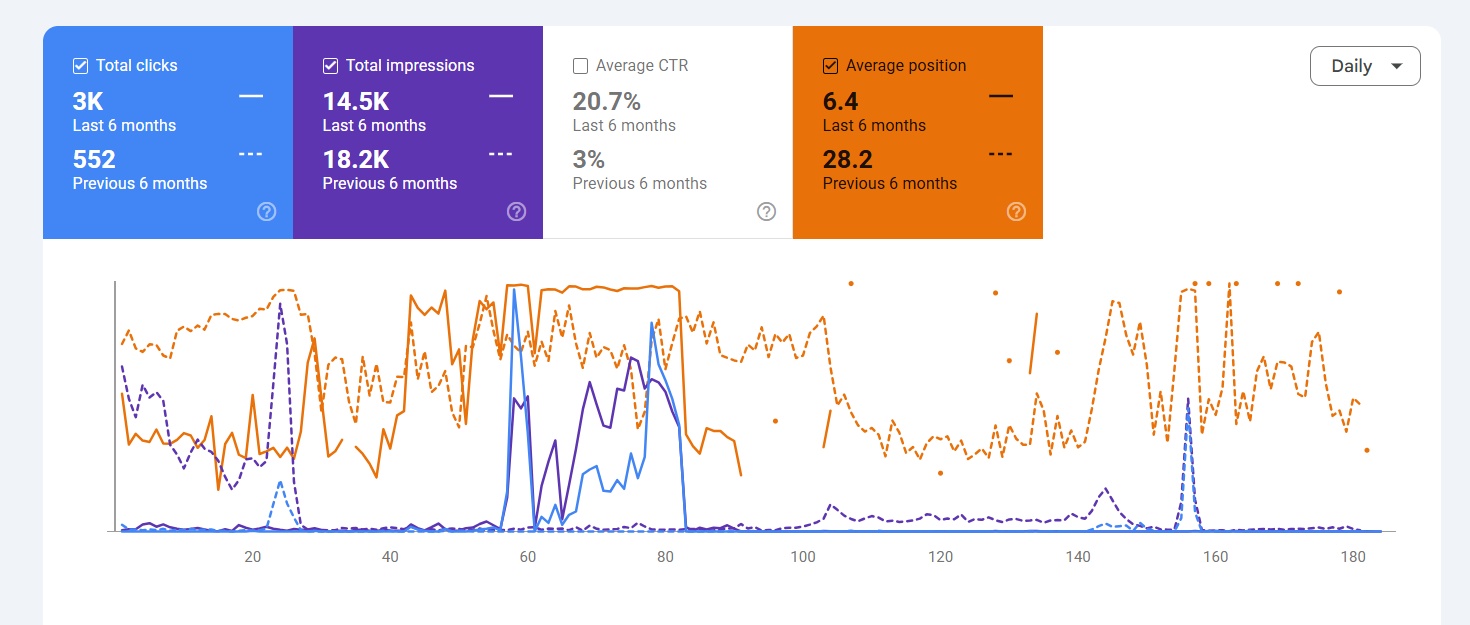


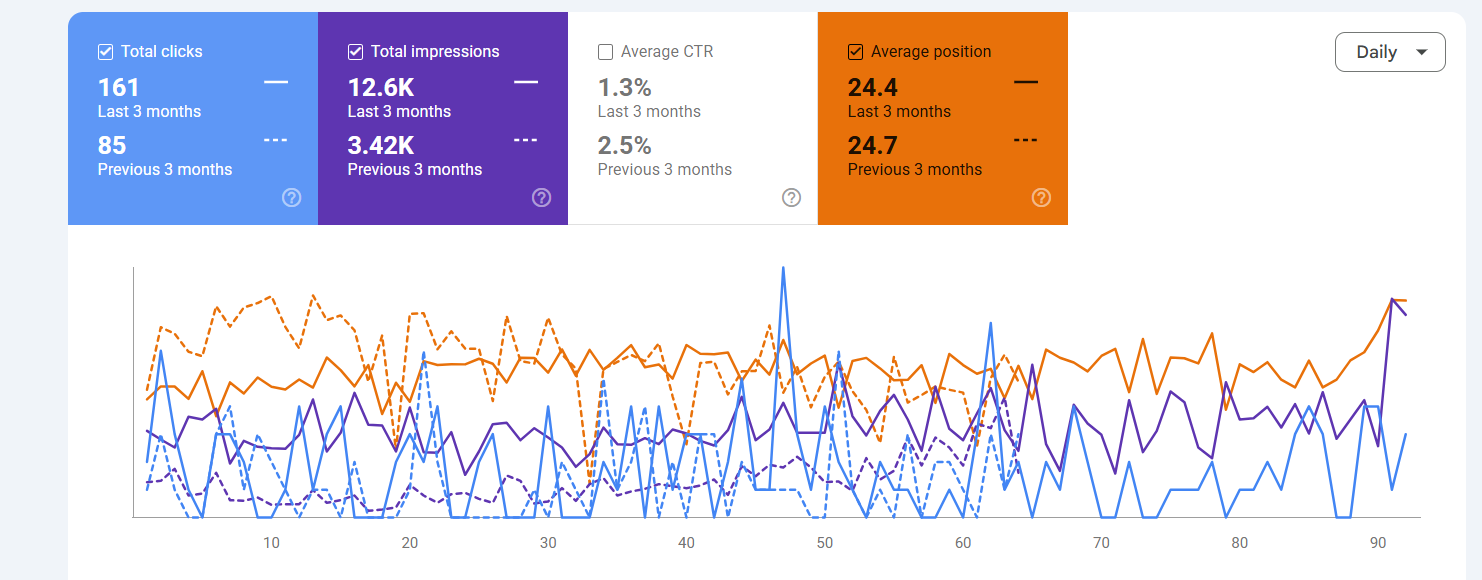

Auto work is won on two things: proximity and whether the shop looks worth trusting with a car. A driver with a check engine light on searches for whoever is closest and open, then decides in about the time it takes to read the profile whether to actually go. Both halves have to be right, or the closer competitor gets the car instead.
The driver is not loyal, they are nearby
Most auto searches carry a location signal without the driver even typing one, because Google already knows where the phone is. That means ranking for "brake repair" in general does almost nothing. Ranking for brake repair in the three or four neighborhoods around the shop is what actually produces calls, and that only happens with pages built for those specific areas rather than one page trying to serve an entire county.
A driver checking the map pack before choosing is also checking the Google Business Profile for hours and a current phone number, so a listing that has drifted out of date costs calls a rebuilt site cannot get back on its own.
Trust is judged in seconds, on a phone, in a parking lot
A driver standing next to a car that will not start is not reading a paragraph about your certifications. They are scanning for a phone number, a rating, and whether the shop looks like it knows what it is doing. That judgment happens fast, which is why the page a driver lands on from search has to answer the trust question immediately, not three scrolls down.
This is where a website build earns its keep for a shop: clear service pages by repair type, real photos of the bay and the work, and the phone number visible without hunting for it.
The dealer-alternative search is the money query
A driver whose German car needs work has usually already flinched at the dealer quote, and the search that follows is not "auto repair" but something closer to independent BMW shop or Mercedes repair not the dealer. That searcher already knows what the job costs done wrong, and a page written for that exact worry, naming the brand and naming the dealer comparison, converts a driver a generic brake or oil page never reaches. The same pattern holds for fleet and small business accounts, since a company with five delivery vans searches for a shop that can handle an account, not a single walk-in repair, and warranty-approved work is its own reassurance for a driver who is worried that using an independent shop voids a factory warranty it does not.
A topical map built for a shop should carry all three as separate pages rather than one paragraph buried in an about page, because each one is a different driver with a different worry.
Smog checks bring the car in, they do not keep it
A state emissions or smog test is a low margin job a driver searches for on a deadline, often because a registration is about to lapse, and it is one of the few auto searches that genuinely is close to price shopping. Its value to a shop is not the test itself but the car sitting on the lift afterward, where a real inspection can turn up the actual job. A site that treats the test as a footfall page rather than an end in itself gets that sequence right.
The same logic applies to the boundary jobs a shop chooses not to take, whether that is anything past a certain tow radius or a repair that needs dealer-only diagnostic equipment the shop does not have. Saying so plainly on the site, rather than after a car has already been towed in, keeps the trust that got the driver to call in the first place.