Content and topical maps
We map everything a customer could search about your trade in your area, then build the pages that cover it, linked so each one lifts the others.

What the numbers actually show

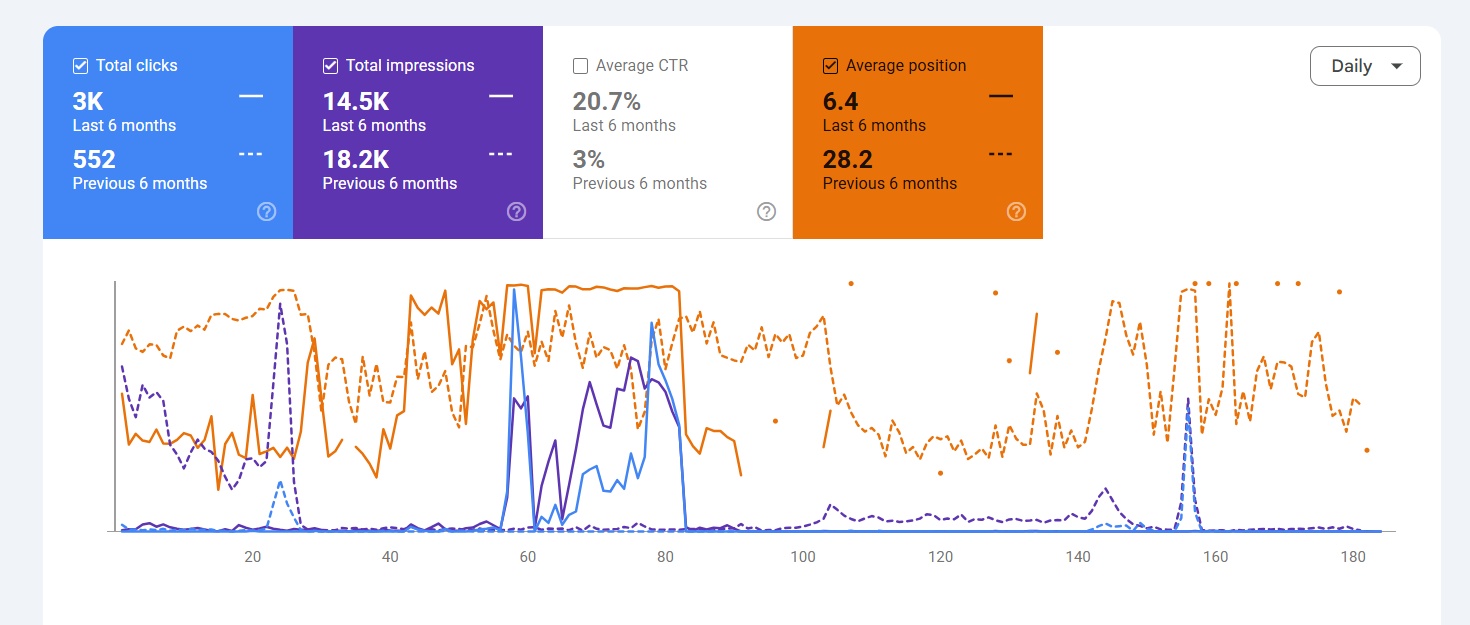


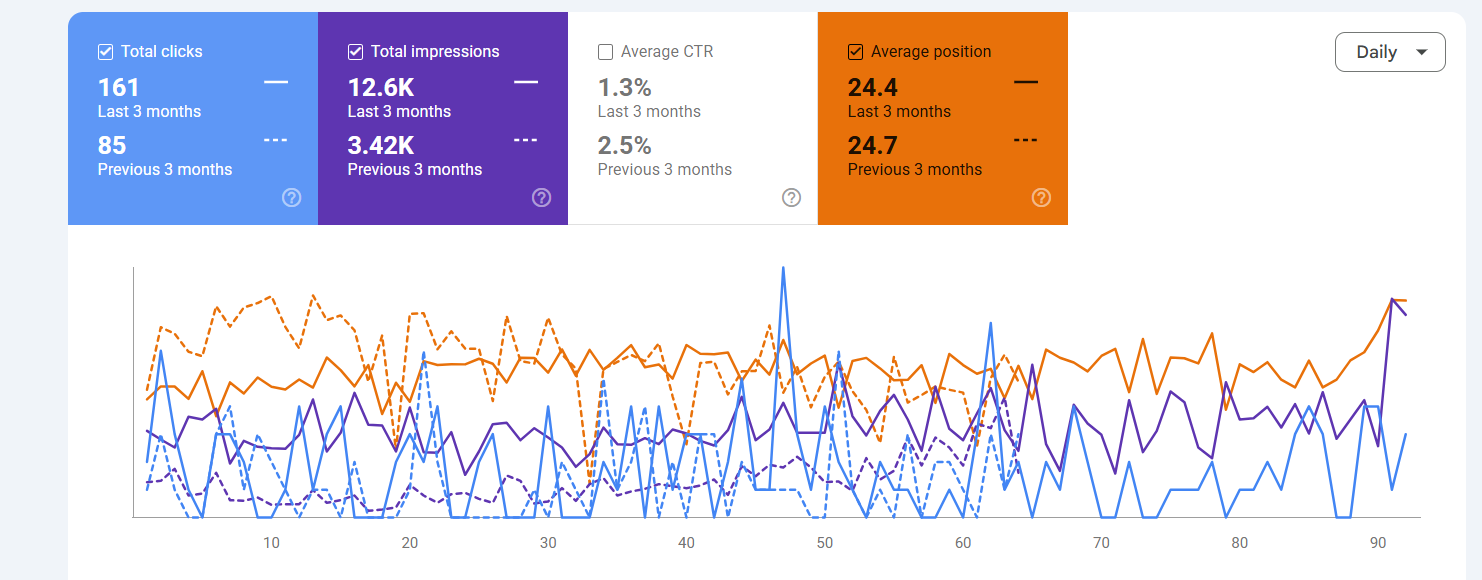

A topical map is the plainest idea in this whole business and the one almost nobody does properly: write down every question a real customer could type about your trade in your area, then build the page that answers each one, and link those pages to each other so the whole set carries more weight than any single page could on its own.
Start from the question, not the service list
Most small business sites have a page called Services and a page called About, and that is close to the whole site. Customers do not search that way. They search the fault, the brand, the part, the neighborhood, the price question. A website build with the right structure is wasted if there is nothing written to fill it, so the map comes before the pages, not after.
For a heating and cooling company that means a page per fault and a page per system type, which is exactly the shape we used for a heating and cooling company with an Armenian owner. For a florist group with three storefronts it means a page per location that reads like it was written about that specific neighborhood, not the same paragraph with the city name swapped.
The links inside the pages matter as much as the pages
A page sitting on its own does very little. The value of a topical map comes from the pages pointing at each other, inside the sentences, where a reader and a crawler both follow the connection naturally. A row of links in a box at the bottom of the page is decoration. A contextual link placed where the sentence needs it is what tells Google, and the reader, that these pages belong to the same body of knowledge.
Carried across a large, deliberately linked set of pages, that approach lifts the whole site rather than one page, and the Search Console readings on this site show what that looks like. The method scales down the same way it scaled up: a smaller trade gets a smaller, tighter map built the same way.
Depth lives in guides, not in a hundred thin pages
A topical map is not an excuse to publish a page for every keyword variation. A part, a symptom or a component is a section inside the page that covers it, not a page of its own competing for the same attention. That keeps each page substantial enough to rank, and it keeps the map to coverage, not padding.
This is the same discipline whether the trade is appliance repair or plumbing and electrical, where the questions run from shutoffs to permit requirements. The map is built from what people type, not from what sounds impressive in a proposal.
Where a map fits alongside everything else
A topical map only works once the site under it is fast and crawlable and the Google Business Profile is verified and categorized correctly. Mapping and writing content is usually the third move, after the profile and the site, and before we spend any effort on links.
Whether that work sits inside Launch for a business starting from zero or Scale for one that is already ranking and wants more coverage, the map itself is built the same way: read the trade, read the area, write down every real question, then answer it properly.